
Review · NEW ZEALAND KAYAKING TOURS
Shore Excursion Guided Sea Kayaking through Akaroa Marine Reserve
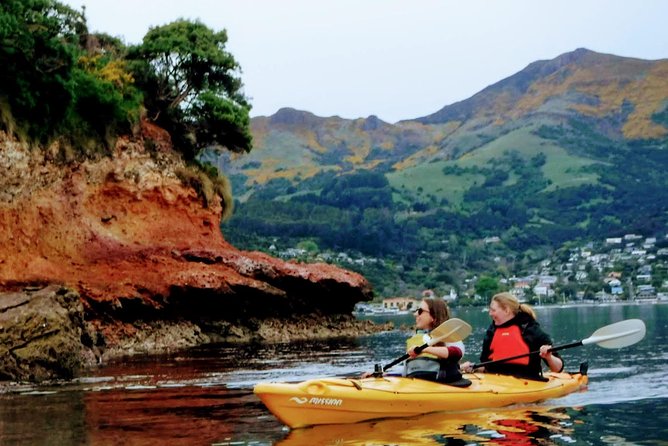
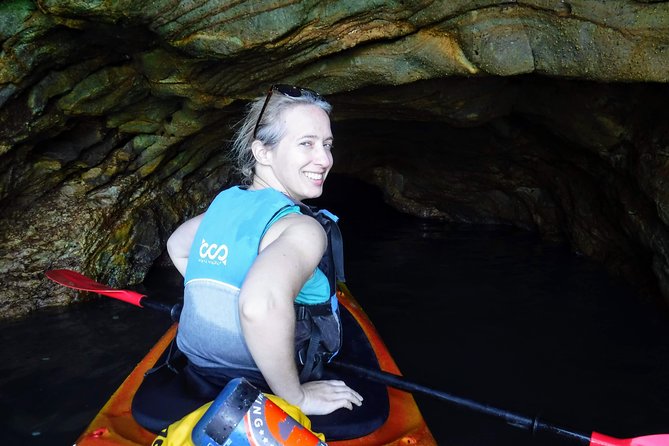
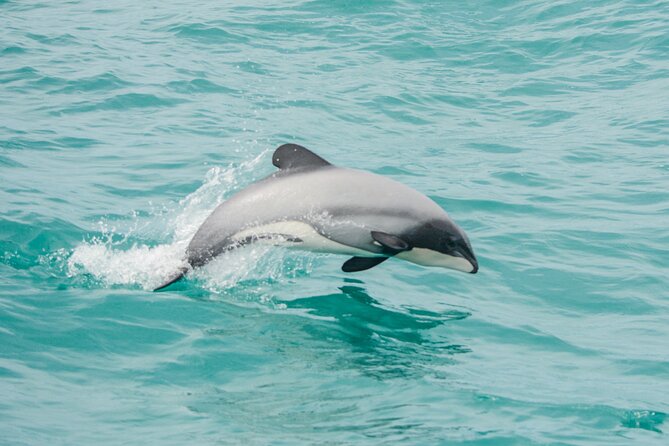
Akaroa’s best scenery is seen from water level, where you paddle beneath volcanic cliffs, past lava formations, and along quiet bays inside an extinct volcano basin. The real prize is the chance to spot a Hector’s dolphin, white-flipper penguin, fur seal, or native seabird.
I like the easy port access and the way guides such as Jake, Joey, John, and Seamus adjust the pace for beginners. I also like the excellent equipment, including rudders, spray skirts, and jackets. The main drawback is simple: wildlife is never guaranteed, and rough weather can keep you inside a sheltered cove.
Key points before you book
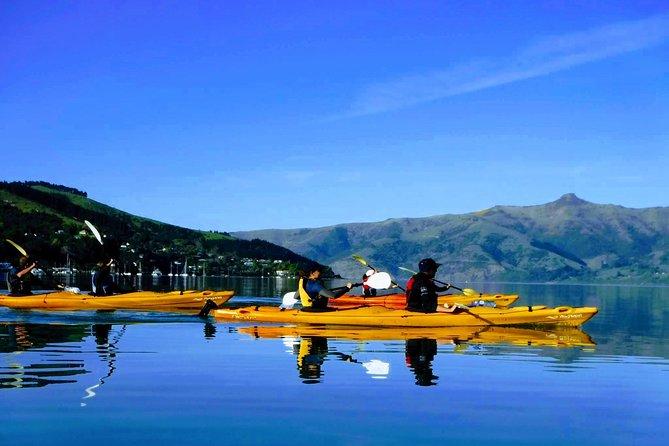
- A volcanic basin viewed from a kayak: Paddle through the flooded crater of an extinct volcano, with unusual lava rock formations along the shore.
- Close to the cruise landing point: The meeting point at Ākaroa Bowling Club is about a short walk from the harbor area, though the directions deserve your attention.
- Good for first-time paddlers: Two-person kayaks, patient instruction, and adjustable pacing make this suitable for beginners with moderate fitness.
- Wildlife sightings vary: Hector’s dolphins, penguins, seals, and birds are possible, but some outings see only a few bird species.
- Small groups matter: The maximum group size is 17, with smaller outings possible, allowing guides to help different ability levels.
- Weather changes the day: Rain may not cancel the trip if conditions remain safe, and wind can limit how far the group travels.
Paddling inside an extinct volcano
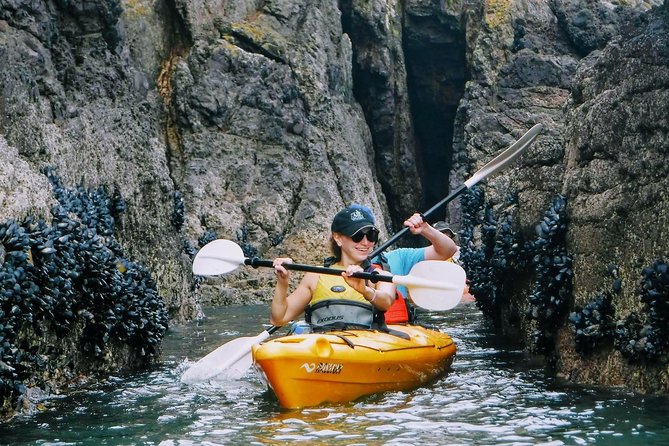
Akaroa’s setting gives this outing more character than a standard harbor paddle. The bay occupies the basin of an extinct volcano, so the water is sheltered in many areas and the shoreline comes with a story written in lava.
From a two-person kayak, you move at the pace of the water rather than from behind a bus window. You may pass rocky shelves, volcanic fissures, unusual formations, and quiet inlets that are easy to miss from land. The scenery is the main constant of the trip. Wildlife is the bonus.
The route usually follows the coastline or explores sheltered bays and inlets. One section may cross more open water, adding a little effort and excitement. Conditions decide how much of the wider harbor you can reach. On a windy day, your guide may keep the group inside a cove, which protects safety but limits the scenery and wildlife search.
The advertised setting includes the Akaroa Marine Reserve. One outing may focus more on the harbor and nearby shore, while another reaches farther into the reserve area. Ask about the planned route on the day if seeing the reserve itself is especially important to you.
More Sea Kayaking in New Zealand
- Wildlife Sea Kayaking Tour – Kaikoura
★ 5.0 · 467 reviews - Day sea kayak tour Rangitoto Island
★ 5.0 · 79 reviews - Auckland: Sunset & Night Sea Kayak Tour to Rangitoto Island
★ 5.0 · 60 reviews
What the two to three hours actually involve
The activity begins at the Ākaroa Bowling Club at 42 Rue Jolie, Akaroa. It finishes back at the meeting point, although one account describes a beach landing followed by a van ride back toward town. That detail suggests the final arrangement can change with the route and day, so do not assume a beach stop or return transfer is included every time.
After meeting the guide, you receive the kayaking equipment. The package includes the kayak, paddle, spray skirt, and jacket, along with instruction and supervision. The kayaks are two-person models, and their rudders and foot pedals make steering easier once you have enough forward movement.
You should expect an active outing rather than a boat ride with occasional paddling. The pace is generally manageable, and the guides can tailor it to the group. Still, you need moderate physical fitness and must be comfortable sitting with your legs extended in a kayak. That position can be hard on your back, especially if you are not used to it.
The time on the water may be around 90 minutes on some outings, with the complete activity lasting close to three hours. The exact duration depends on the tour format, route, weather, and group. One version is described as a 2.5-hour Crater Cruiser, while sunrise outings are listed at three hours.
That variation is worth noting if you are fitting this between a ship’s arrival and departure. It is a good idea to allow extra time beyond the nominal tour length, especially when tender boats are involved.
Guides who make the difference
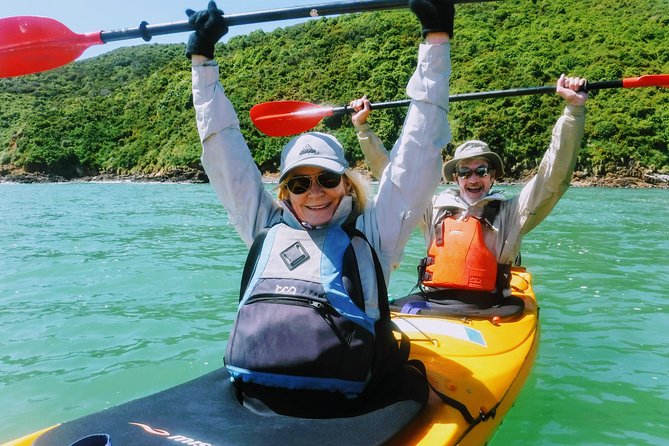
The guide is central to this outing. You are not simply handed a kayak and sent around the bay. The guide sets the pace, watches the group, points out wildlife, and explains the geology and local story of the coastline.
Jake is repeatedly praised for helping beginners steer, keeping the mood relaxed, and explaining birds, plants, dolphins, and the surrounding rock. Joey is noted for humor and strong local knowledge. John is described as calm, patient, and helpful with less able members of a group. Seamus has a particular strength in explaining the bay’s marine life and natural setting.
Other guides named include James, Nick, Thomas, Jack, Allie, and Grenville. The individual guide will vary, but the pattern is clear: the best part of the tour is often the combination of paddling help and interpretation. A quiet rock wall becomes more interesting when you understand its volcanic origin, and a distant bird becomes more than a speck when you learn what to look for.
This also makes the outing friendly to mixed groups. Experienced paddlers can enjoy the setting without racing ahead, while first-timers get support without being made to feel slow. Guides have adjusted the outing for different skill levels and helped less confident paddlers without drawing attention to them.
Wildlife: wonderful when it happens, uncertain by nature
The tour is designed around the possibility of wildlife, not a guarantee. Akaroa is associated with Hector’s dolphins, one of the world’s smallest and rarest dolphin species, as well as white-flipper penguins, New Zealand fur seals, and many native seabirds.
Some paddlers have had extraordinary encounters, including Hector’s dolphins swimming near or beneath a kayak. Others have seen a mother and young dolphin or a small pod staying close to the group. Those moments can turn a pleasant paddle into a day you remember for years.
You might also see penguins, seals, spotted shags, gulls, Canada geese, and other birds. The guide will point out wildlife along the shoreline and in the trees. Bring realistic expectations, though. Several outings have produced only a few birds, with no dolphins, penguins, or seals.
Time of year, weather, sea conditions, and plain luck all matter. If your main goal is a guaranteed animal sighting, this is the wrong kind of activity. If you enjoy being outside and will appreciate the volcanic coast even when the wildlife stays hidden, the balance is much better.
Avoid making sudden movements or loud attempts to attract animals. The low-impact approach is part of the appeal, and the small groups help keep the outing quieter in a fragile natural area.
Same shoreline, another way to paddle it:
- Cathedral Cove Kayak Tour
★ 5.0 · 887 reviews - Twilight Glowworm Kayak Tour – Lake Karapiro
★ 5.0 · 493 reviews - Seal Kayaking Adventure in Kaikoura
★ 5.0 · 422 reviews - Small-Group Kayak Adventure from Franz Josef Glacier
★ 5.0 · 393 reviews
Calm water, rain, and the limits of the forecast
Akaroa’s harbor often provides sheltered water, which is one reason this works well as a shore excursion. You are not heading straight into exposed ocean conditions. Still, shelter does not mean glassy water every day.
One outing may be calm and easy. Another may be choppy in places, with wind making the crossing more demanding. On a rainy day, visibility can turn gray and the group may remain inside a cove. That can reduce the views and wildlife opportunities, but the trip may still operate if conditions are considered safe.
The supplied jacket and spray skirt help keep you dry, but you should still bring suitable rain protection. A waterproof layer is particularly useful for the walk to and from the meeting point. You also need to accept that the weather is part of the setting, not a minor detail to be ignored.
The operator may cancel for poor weather, in which case you are offered another date or a full refund. If the minimum group size is not reached, the same options apply. If you cancel for your own reasons, the booking is non-refundable and cannot be amended, so cruise passengers should be careful when planning around tender schedules.
Getting from the ship to the kayaks
The meeting point is the Ākaroa Bowling Club, 42 Rue Jolie. Transport to and from the attraction is not included, but the location is near the harbor and public transportation.
For cruise passengers, this is a practical choice because the departure point is within walking distance of the tender landing area. One important warning: follow the meeting instructions carefully. The route can be less obvious than expected, and it is easy to walk past the correct place or continue toward the edge of town.
Build in time after your tender arrives. A late tender can make any shore excursion stressful, although the company has worked with delayed ship passengers when possible. You should still not count on an extended wait, especially if the group has a fixed launch time.
The activity ends at the original meeting point according to the standard details. Because some outings have used a beach finish and a van return, confirm the day’s arrangement if you need to reach the pier by a particular time.
Equipment and comfort on the water
All kayaking equipment is supplied, including spray skirts and jackets. The kayaks have been described as being in good condition, with rudders that help with steering. That is useful for beginners, although a rudder works best when the kayak is moving rather than sitting still.
You share a kayak with another person, so this works best when both paddlers are willing to cooperate. The guide gives safety and paddling instruction before setting off, then helps with direction and technique as needed.
The physical demand is moderate. You need to paddle for much of the outing, manage a kayak, and sit in a fixed position. The route is not presented as an extreme adventure, and it suits beginners as well as experienced kayakers, but it is still active. The minimum age is 10, and children must be accompanied by an adult.
Service animals are allowed. The activity has a maximum of 17 participants, though actual group sizes can be smaller. One outing had only six paddlers and one guide, which gave the guide plenty of room to adjust the pace and offer personal help.
Is $83.78 a fair price?
At $83.78 per person, this is not the cheapest way to spend port time, but the price covers the guide, kayak safari, and all kayaking equipment. You are paying for access to the water, instruction, safety support, and interpretation of the geology and wildlife, not just for a rented kayak.
The value is strongest when the group is small and the guide is able to spend time helping individual paddlers. It is also good value if you want an active outing close to the ship without arranging your own transport, equipment, and route.
The value drops if you are booking mainly for a guaranteed dolphin or penguin sighting. A quiet paddle with birds and scenery can still be worthwhile, but it may not match your expectations if you view the wildlife promise as the main product.
Snacks are not included, so eat beforehand or plan food separately. The activity lasts only a few hours, but paddling in cool or wet weather can leave you ready for something warm afterward.
Who should choose this Akaroa outing?
I would choose this for a cruise stop if you want fresh air, a little exercise, and a close look at Akaroa’s unusual volcanic shoreline. It suits first-time paddlers, couples, families with children aged 10 or older, and experienced kayakers who prefer a guided route with local context.
It is especially useful for a mixed-ability group. The guides have shown patience with beginners and can adjust the pace rather than turning the outing into a race.
I would hesitate if you have back problems, dislike sitting with your legs stretched out, or want a dry and predictable activity. I would also think twice if your entire decision depends on seeing dolphins. Nature may provide that moment, but it may just as easily provide seabirds, rain, rock formations, and a peaceful paddle.
Should you book it?
Book this if you want to see Akaroa from the water and are happy to let the day’s conditions shape the adventure. The volcanic scenery, capable guides, solid equipment, and easy harbor access make it a strong use of limited port time.
Go in expecting a guided coastal paddle, not a guaranteed wildlife safari. If dolphins appear beside your kayak, you may have one of the great small moments of a New Zealand cruise. If they do not, the bay, lava formations, and calm instruction still give you a worthwhile outdoor experience.
FAQ
Where does the sea kayaking tour start?
It starts at the Ākaroa Bowling Club, 42 Rue Jolie, Akaroa 7520, New Zealand.
Where does the activity finish?
The standard meeting details state that the activity ends back at the meeting point. Some routes may use a beach landing and a van return, so confirm the arrangement on the day if timing matters.
How long does the kayaking experience last?
The activity lasts approximately two to three hours. Specific formats include a 2.5-hour Crater Cruiser and three-hour sunrise tours.
Is transport included?
Transport to and from the attraction is not included. The meeting point is near the harbor and can be reached from the cruise tender area by walking.
What equipment is provided?
The tour provides the kayak, paddle, spray skirt, jacket, and other required kayaking equipment.
Do I need previous kayaking experience?
No. The activity is suitable for beginners and experienced kayakers, and guides provide safety and paddling instruction. You should still have moderate physical fitness.
What is the minimum age?
The minimum age is 10 years. Children must be accompanied by an adult.
How many people can join the tour?
The maximum group size is 17 participants. Actual group sizes may be smaller.
Will I see Hector’s dolphins or penguins?
Sightings are possible but not guaranteed. You may also see fur seals and native seabirds, while some outings see only a few bird species.
What happens if the weather is poor?
The operator may cancel if conditions are unsuitable. If the experience is canceled for poor weather, you are offered a different date or a full refund. Rain alone does not always stop the tour if conditions remain safe.
Fresh kayak reviews from New Zealand
- Rangitoto Island: Sea Kayak & Summit Hike Day Trip★ 4.8 · 31 reviews
- From Queenstown: Dart River Canoe & Jet Boat Day Trip★ 4.8 · 148 reviews
- Franz Josef: Kayak & Walking Tour to Okarito Kiwi Sanctuary★ 4.9 · 61 reviews
- Epic Tandem Kayak Tour down the Kaituna River Waterfalls★ 5.0 · 6 reviews
- Christchurch: Waka Paddling Experience on the Avon River★ 4.8 · 7 reviews
- Christchurch: Sea Kayaking Tour of Lyttelton Harbour★ 5.0 · 6 reviews
- Auckland: Browns Island (Motukorea) Sea Kayak Tour★ 5.0 · 22 reviews
- Auckland: City Lights Night Kayak Tour★ 5.0 · 11 reviews
Sea Kayaking, compared.
Dubrovnik: Sea Kayaking&Snorkelling Guided Day/Sunset Tours
Read our review →
X-Adventure Sea Kayaking Half Day Tour in Dubrovnik
Read our review →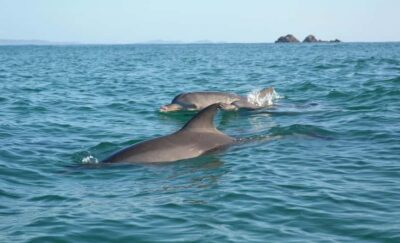
Santorini Sea Kayak – South Discovery, Small Group incl. Sea Caves and picnic
Read our review →
Morning and Day Tours – Sea Kayaking & Snorkelling Dubrovnik
Read our review →Browse the lists this tour appears in