Review · AUCKLAND KAYAKING TOURS
Rangitoto Island: Sea Kayak & Summit Hike Day Trip
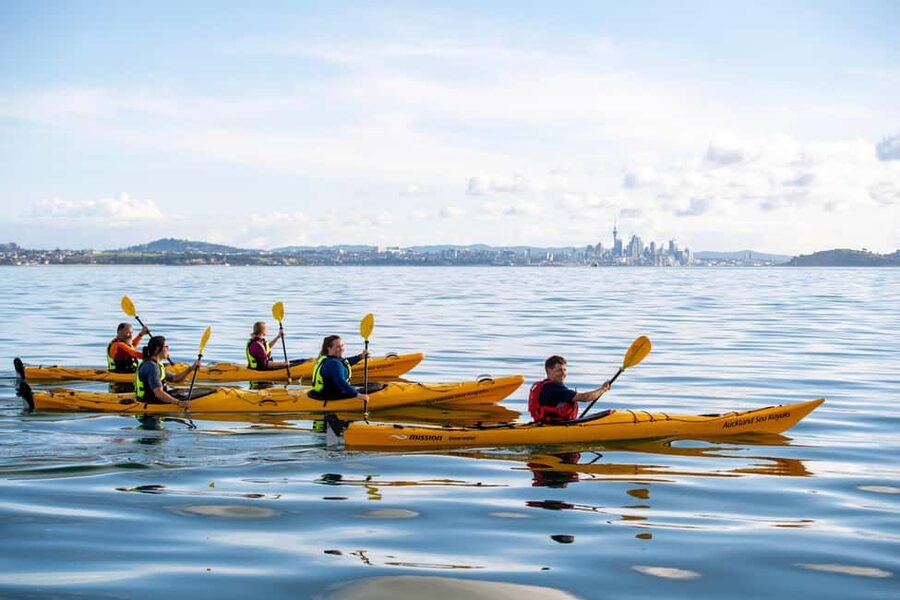
Rangitoto rises from Waitemata Harbor like a dark volcanic shield, and this trip lets you reach it under your own power. You paddle across Auckland’s sparkling waters, walk through pohutukawa forest and baked scoria, then look back at the city from the summit. It is a much more active way to see Auckland than taking a ferry and following the usual trail.
I like the small group of no more than nine, which gives the guide room to help with paddling and keep an eye on changing conditions. I also like the simple rhythm of the day: sea air, a one-hour summit walk, and a hearty Kiwi barbecue lunch. The main drawback is clear: open-water kayaking can feel hard in wind, especially on the return trip, so this is not a good choice if you have a low fitness level or dislike exposed water.
Key points to know before you book
- Paddle from St Heliers Bay across Waitemata Harbor, with safety instruction and kayaking equipment supplied.
- Climb Auckland’s youngest and most active volcano on a leisurely one-hour walk to Rangitoto’s summit.
- Expect wide 360-degree views across Auckland and the surrounding harbor from the top.
- Look for marine life, including Little Blue Penguins and Cooks Petrels, although sightings are not guaranteed.
- Eat a barbecue lunch with hot and cold drinks beside the island before returning by kayak.
- Plan for a full day outdoors, with comfortable clothes, comfortable shoes, and enough fitness for open-water paddling.
Why Rangitoto is worth reaching by kayak
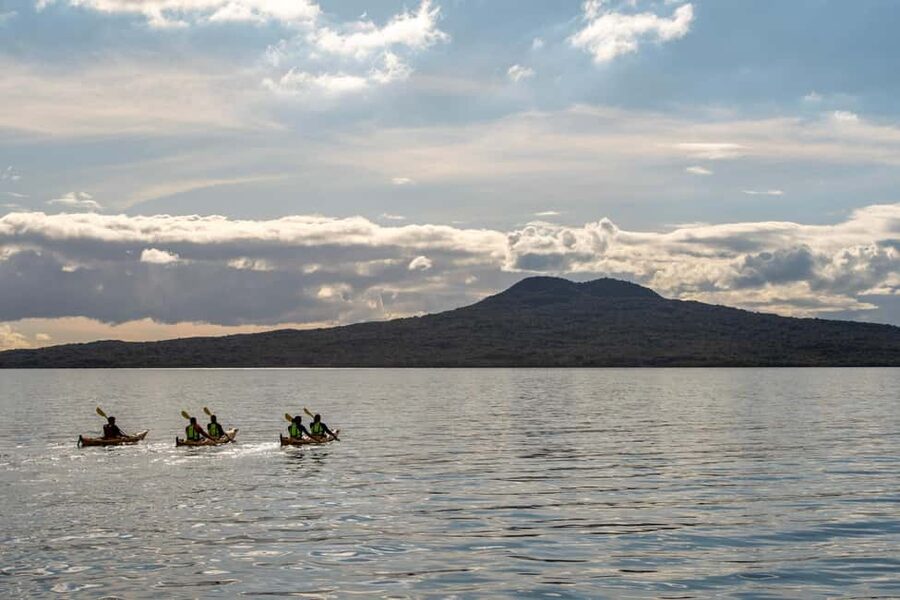
Rangitoto is one of Auckland’s defining sights, but the usual ferry visit gives you only one angle on it. From a kayak, you watch the island grow larger as you cross the harbor. The city recedes behind you, and the volcano takes over the view.
The name Waitemata means sparkling waters, and the harbor is the setting that makes this trip special. You are not simply being transported to a walking trail. You are part of the crossing, with the water, wind, and tide shaping the feel of the day.
That also makes the trip less predictable than a standard sightseeing outing. Calm conditions can make the crossing pleasant and steady. Wind can turn the paddle home into the hardest section of the day. One useful detail from past outings is that the beach may seem stubbornly far away on the return, especially after the hike and lunch.
I would choose this trip for the combination of two different kinds of effort. You use your arms on the way out, your legs on the island, and then your arms again on the way back. It is active, but the day is broken into manageable sections rather than being one long, punishing workout.
More Island Kayak Tours in New Zealand
- Sunset kayak tour to Rangitoto Island
★ 5.0 · 168 reviews - Whangamata: Donut Island Guided Kayaking Experience
★ 4.8 · 143 reviews - Day Cruise & Island Tour – Snorkel/Wildlife/Paddleboard/Islands
★ 5.0 · 121 reviews
Starting at St Heliers Bay
The regular meeting point is St Heliers Beach at 384 Tamaki Drive. You meet at the beach at the scheduled start time, where the guide provides a safety briefing and instruction before you set off.
If you request pickup, the meeting point is The Atrium at the Auckland War Memorial Museum. Pickup there is 30 minutes before the tour start time, followed by a short drive to the beach. This option is useful if you are staying in central Auckland or prefer not to arrange your own way to St Heliers.
The group size matters here. With a maximum of nine people, the guide can give practical paddling help rather than delivering a distant talk to a crowd. The guide also has a better chance to notice if someone is struggling with technique, pace, or confidence.
You do not need to arrive as an expert kayaker. Instruction is included, and the guide explains how to handle the kayak before you leave shore. Still, you should take the fitness warning seriously. The trip is not suited to people with back problems, wheelchair users, people over 275 pounds or 125 kilograms, people with a low level of fitness, or people over 95 years old.
Wear comfortable clothes and comfortable shoes. Since you will be outdoors for the day, I would choose practical clothing that allows easy movement rather than dressing for a city tour.
The Waitemata Harbor crossing
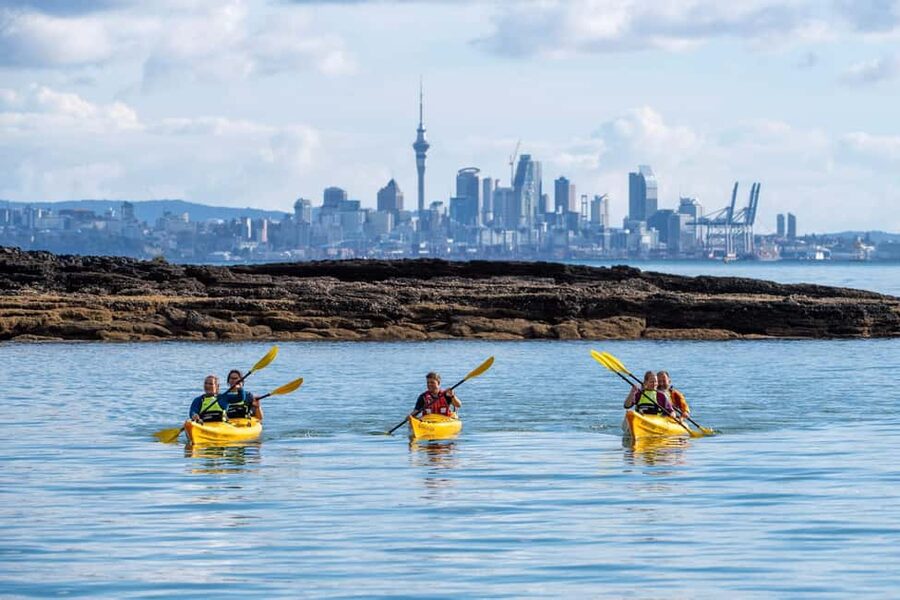
Once the briefing is finished, you paddle north across the harbor toward Rangitoto. This is the part that gives the excursion its character. You see Auckland from water level, with the city behind you and the volcanic island ahead.
The guides are there to help with paddling technique and safety, not just to point out sights. Past guides have included Tony, Ben, Daniel, and Eric, and the strongest experiences have centered on guides who kept the mood relaxed while giving clear help. Daniel, for example, made a solo participant feel comfortable during the crossing and later prepared lunch.
Wildlife is possible along the way. Little Blue Penguins and Cooks Petrels may be seen, but you should treat them as a bonus rather than a promise. The harbor itself is the main show: open water, shifting views, and fresh air far removed from Auckland’s roads.
Wind is the key variable. Calm water makes the paddle more enjoyable and lets you concentrate on the views. Difficult wind conditions can make the crossing tiring, even when the guide is attentive and the route remains manageable. The guides may use a sail on the return journey if conditions and time allow, helping take some pressure off the paddle back to St Heliers Bay.
That flexibility is valuable. You are not locked into one rigid version of the experience. At the same time, you should understand that kayaking across open water is different from paddling on a sheltered lake. If you are nervous, tell the guide early. The small group allows more personal support than a large commercial outing.
Rangitoto’s volcanic summit walk
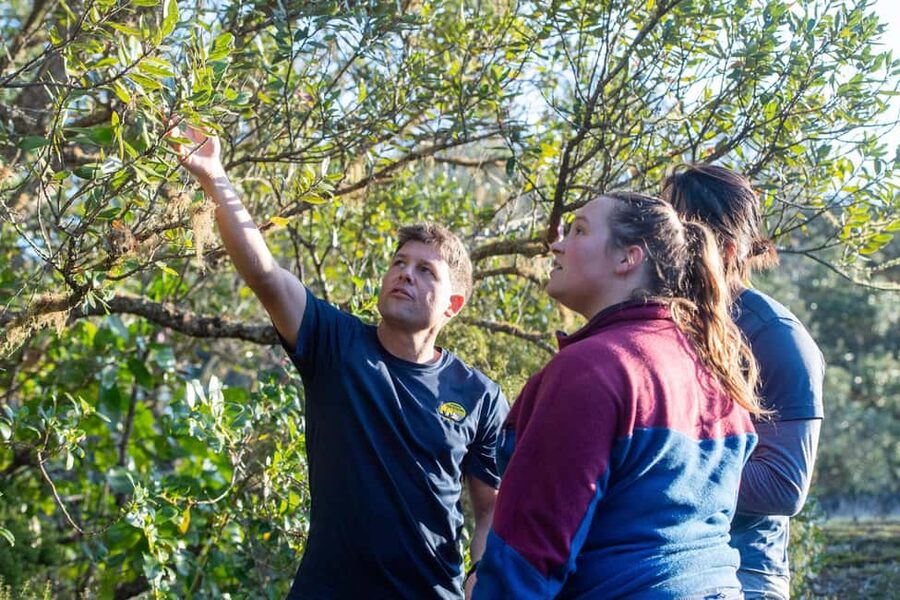
After landing on Rangitoto, you begin a leisurely hike of about one hour to the summit. The path climbs through pohutukawa-covered ground and across baked scoria rocks, the rough volcanic material left by the island’s eruptions.
The island supports more than 200 native trees and flowering plants. That makes the walk more than a simple climb to a viewpoint. You get a close look at how plant life has taken hold on volcanic ground, with the black and reddish scoria contrasting with the native forest.
The guide can also explain the island’s regeneration after lava flows. Tony, in particular, helped make that natural story part of the walk, showing how Rangitoto’s plant life has developed on relatively young volcanic terrain.
The word leisurely is important, but this is still an uphill walk after a kayak crossing. The trail is not presented as a technical climb, yet you need enough stamina to walk uphill and return to the shore afterward. Comfortable shoes are essential.
At the top, the reward is a 360-degree view across Auckland and the harbor. You can appreciate the city’s position among islands, water, and volcanic cones in a way that is difficult from street level. I like this viewpoint because it connects the physical effort of the day with a clear visual payoff. You see exactly where you have come from and how much water separates the island from the city.
The main limitation is time. The summit walk is about an hour, and the full day also includes the crossings and lunch. Rangitoto has other trails, but you may not have time to walk farther. If your main goal is to explore the island on foot, a ferry-based visit may give you more freedom. If your goal is to combine a summit walk with a sea crossing, this schedule is well judged.
More Sea Kayaking in New Zealand
- Wildlife Sea Kayaking Tour – Kaikoura
★ 5.0 · 467 reviews - Shore Excursion Guided Sea Kayaking through Akaroa Marine Reserve
★ 5.0 · 160 reviews - Day sea kayak tour Rangitoto Island
★ 5.0 · 79 reviews - Auckland: Sunset & Night Sea Kayak Tour to Rangitoto Island
★ 5.0 · 60 reviews
Lunch beside the island
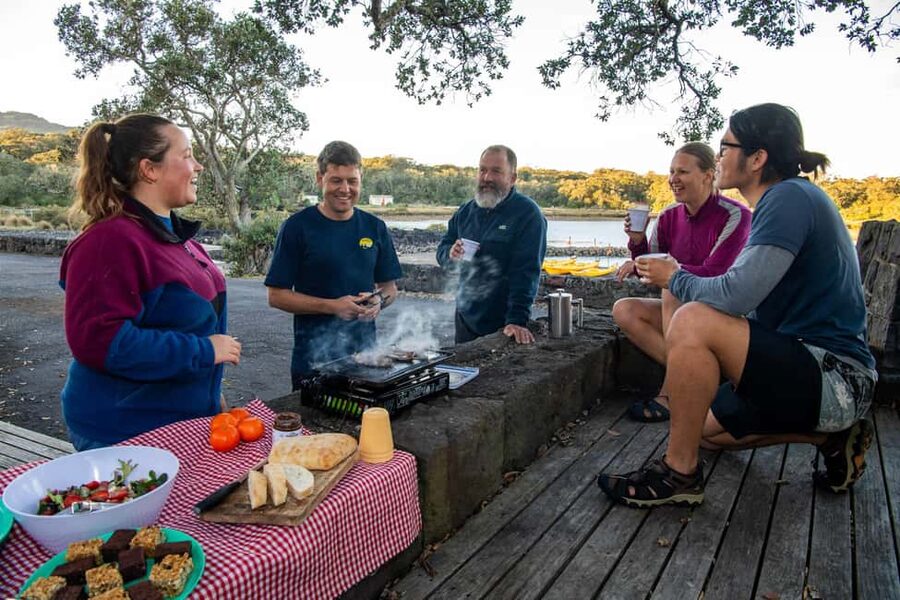
After returning to the water’s edge, you receive a healthy, hearty Kiwi lunch with hot and cold drinks. The meal is described as a barbecue, and the food is a meaningful part of the day rather than a minor snack.
That matters because the timing is physical. You have already paddled and walked uphill, so lunch gives you a chance to refuel before the return crossing. One outing included steak cooked by Daniel, while other descriptions simply refer to a barbecue lunch, so the exact food may vary.
The guides also add warmth to this stop. Ben was praised for cooking the barbecue during a day with difficult wind, while other guides helped keep the mood light and social. With such a small group, lunch can feel more like a shared outdoor break than a quick meal handed over at a crowded attraction.
If conditions and time allow, you may also have a chance for a refreshing swim before the equipment is packed back into the kayaks. This is an optional extra, not the central promise of the trip, so do not count on a long beach stop.
The return paddle to St Heliers
The return follows the same general route south toward St Heliers Bay. By this point, you have completed the summit walk, eaten lunch, and spent a full day in the elements. For many people, this will be the most tiring section.
The return can feel harder if the wind changes or you are running low on energy. That is the practical tradeoff for reaching Rangitoto by kayak. The trip gives you a stronger sense of place than a ferry ride, but you must paddle back rather than simply sit down and relax.
The possible use of a sail is a welcome touch. When conditions permit, it can help carry the group safely toward the beach. Your guide remains responsible for managing the return, but your own comfort will still depend on your fitness and the day’s weather.
I would not book this as a gentle sightseeing day. I would book it as an outdoor adventure with a moderate physical demand, a volcanic walk, and a meal built into the middle. That distinction will help you make the right choice.
What the $144 price includes
At $144 per person, the trip is good value if you want an active, guided day rather than separate tickets for transport and activities. The price includes the guide, safety briefing, kayaking instruction, all kayaking equipment, light refreshments, barbecue lunch, and hot and cold drinks.
You are also paying for a small group and for the logistics of getting to and from Rangitoto by kayak. A ferry trip may be simpler, but it does not provide the same instruction, guided crossing, or barbecue meal.
The value depends on how you like to spend a day. If you want maximum independence, more time on Rangitoto’s other trails, or a quiet ride with little physical effort, this will not be the best use of your money. If you want a focused outdoor experience with a clear summit goal and professional support, the inclusions make the price reasonable.
The 4.8 rating from 31 published ratings reflects a strong level of satisfaction, but I would read that alongside the weather warnings. Good guides and good food help, yet no guide can remove wind from an open-water crossing.
Who should book this trip
I would recommend it to active visitors who want to see Auckland from the water and from a volcanic summit in the same day. It also suits solo participants, since the small group and attentive guide can make the experience feel less awkward than joining a large sightseeing tour alone.
It is a good fit if you enjoy:
- Outdoor activity with instruction provided
- Small groups rather than coach tours
- Volcanic geology and native plants
- Big city views reached by physical effort
- A practical lunch included in the day
- A flexible experience shaped by sea conditions
I would choose another activity if you have back problems, use a wheelchair, have a low fitness level, or feel uneasy about paddling in open water. The tour also has a stated weight limit of 275 pounds or 125 kilograms and is not suitable for people over 95 years old.
For a less demanding look at Auckland, consider a harbor safari, hop-on hop-off sightseeing, or a Waiheke tour instead. For a more active experience without this particular open-water crossing, Auckland also offers ziplining and other kayaking options.
Booking details and cancellation
The tour lasts one full day, with starting times depending on availability. The instructor speaks English, and the group is limited to nine participants.
You can cancel up to 24 hours in advance for a full refund. That policy is useful when your Auckland schedule depends on weather, but you should still allow enough flexibility to choose a day with conditions suitable for paddling.
Should you book the Rangitoto kayak and summit trip?
Book it if you want Rangitoto to feel like an achievement, not just a stop on a ferry route. The crossing, summit hike, volcanic scenery, lunch, and wide city views fit together into one active day, and the small group gives the guide room to offer real help.
Skip it if you want a relaxed island visit, a long independent walk, or a fully sheltered outing. For the right person, $144 buys far more than transport: it buys a memorable route to one of Auckland’s best viewpoints. Just arrive ready to paddle, climb, eat well, and paddle again.
FAQ
How long does the Rangitoto kayak and summit trip last?
The activity lasts one full day. Check availability for the specific starting time.
Where does the tour meet?
The main meeting point is St Heliers Beach at 384 Tamaki Drive. If you request pickup, meet at The Atrium at the Auckland War Memorial Museum 30 minutes before the tour starts.
Is kayaking instruction included?
Yes. The tour includes a safety briefing, paddling instruction, a guide, and all kayaking equipment.
How large is the group?
The group is limited to nine participants.
What food and drinks are included?
The tour includes light refreshments, a barbecue lunch, and hot and cold drinks.
Is the tour suitable for people with limited fitness?
No. The activity is not suitable for people with a low level of fitness. It includes open-water kayaking and a one-hour uphill walk to the summit.
What should I bring?
Bring comfortable shoes and comfortable clothes.
More One-Day Trips in New Zealand
- From Queenstown: Dart River Canoe & Jet Boat Day Trip
★ 4.8 · 148 reviews - Abel Tasman Kayaks: 1 Day Freedom Kayak Rental
★ 4.7 · 58 reviews - 1 Day Sea Kayak Rental
★ 5.0 · 36 reviews - Half-Day Trip from Key West with Kayaking, Snorkeling & Sunset
★ 5.0 · 1,683 reviews
More Kayak and Hike Days in New Zealand
- 4-hour Lake Mapourika Kayak and Hike adventure, with Okarito Kiwi Sanctuary
★ 5.0 · 117 reviews - Abel Tasman National Park: Cruise, Kayak, & Hike Tour
★ 5.0 · 9 reviews - Kauai: Secret Falls Kayak and Hike
★ 5.0 · 1,403 reviews - Kauai Adventure: Kayak & Hike to Secret Falls with Expert Guide
★ 5.0 · 1,387 reviews
Fresh kayak reviews from New Zealand
- From Queenstown: Dart River Canoe & Jet Boat Day Trip★ 4.8 · 148 reviews
- Franz Josef: Kayak & Walking Tour to Okarito Kiwi Sanctuary★ 4.9 · 61 reviews
- Epic Tandem Kayak Tour down the Kaituna River Waterfalls★ 5.0 · 6 reviews
- Christchurch: Waka Paddling Experience on the Avon River★ 4.8 · 7 reviews
- Christchurch: Sea Kayaking Tour of Lyttelton Harbour★ 5.0 · 6 reviews
- Auckland: Browns Island (Motukorea) Sea Kayak Tour★ 5.0 · 22 reviews
- Auckland: Bioluminescence Kayak Tour with Guide★ 4.4 · 42 reviews
- Auckland: City Lights Night Kayak Tour★ 5.0 · 11 reviews
Island Kayak Tours, compared.
Halong Bay Day Tour With Titop Island, Cave, Kayak & Lunch
Read our review →
Phuket: James Bond Island Longtail Boat and Sea Canoe Tour
Read our review →
Kailua Bay, Oahu: Epic Kayak and Snorkel to Islands
Read our review →

James Bond Island with Canoeing and Lunch by Speedboat
Read our review →
Easy Ride Pedal Kayak Tour Marco Island & Naples (Pedal or Paddle
Read our review →
Pula: Cave Kayak Tour, Snorkeling and Island Jumping
Read our review →