
Review · WORLDWIDE
From Tagbilaran City/Panglao Island: Bohol Mangrove Kayaking
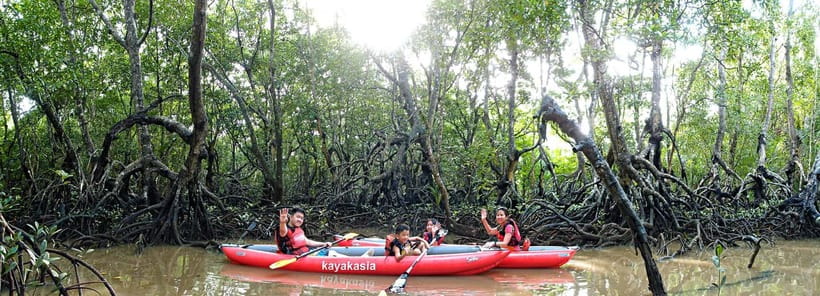
The best part of this Bohol outing is its quiet mangrove tunnels, where you steer your own kayak through narrow waterways instead of sitting in a motorboat. Local guides such as Vince and Jeremy explain the plants, birds, crabs, and river communities as you go. I especially like the small-group approach and the fact that your fee supports the river community and conservation work.
I also like that this is a real paddling experience, with a lesson, safety briefing, gear, water refills, changing rooms, and food included. The main drawback is the travel time from Panglao, which can approach an hour each way, and the kayaking itself is limited to two hours. If you want a full-day adventure or cannot swim, this is not the right fit.
Key points at a glance
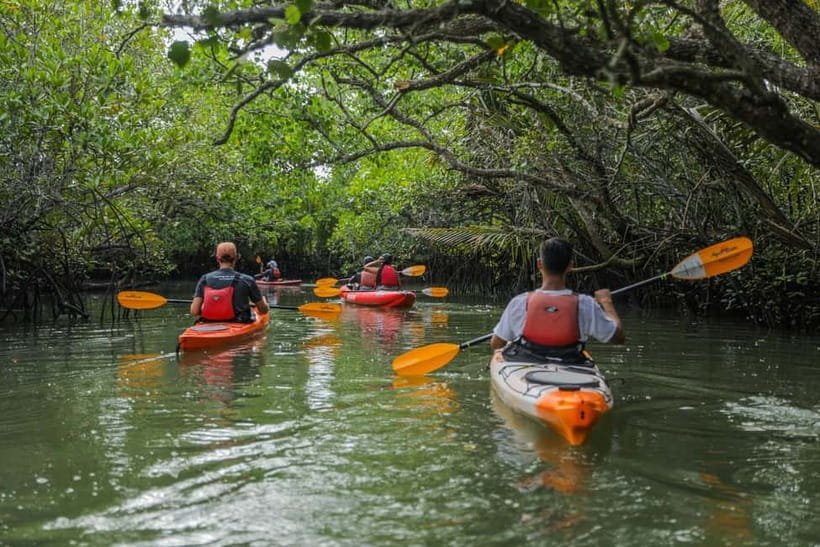
- Mangrove tunnels by kayak: You paddle through narrow, winding corridors and open river sections without a motor.
- Local guides Vince and Jeremy: Guides explain the ecosystem, local life, birds, plants, crab holes, and the effect of typhoons on the area.
- Small, low-impact groups: Limited spaces help keep the river quiet and reduce pressure on the mangrove forest.
- Beginner-friendly instruction: A basic lesson and full safety briefing come before you set off.
- Useful inclusions: Transport, kayak equipment, river fees, lockers, changing rooms, water refills, drinks, and food are covered.
- Best for nature lovers: You need to be at least six years old, able to swim, and comfortable with a physical activity on the water.
The Abatan River is Bohol at a quieter pace
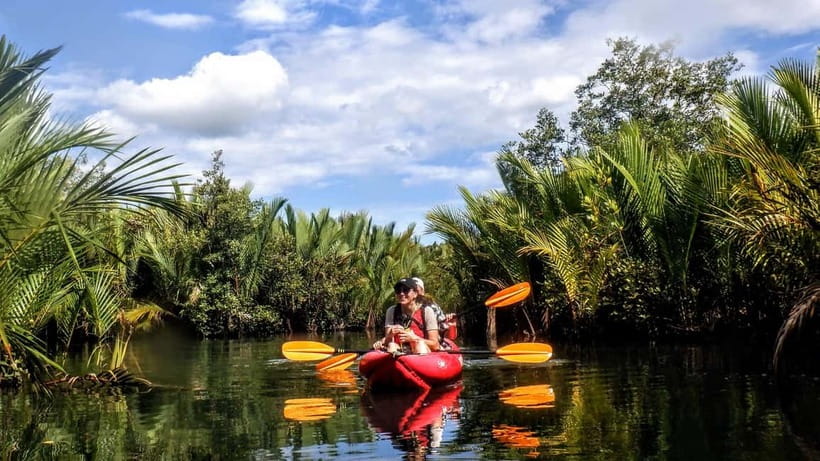
Many Bohol outings focus on beaches, viewpoints, or busy wildlife stops. This one takes you inland, to the Abatan River, where the pace is set by your paddle and the current. The river is not presented as a stage show. You are there to move quietly through a working ecosystem.
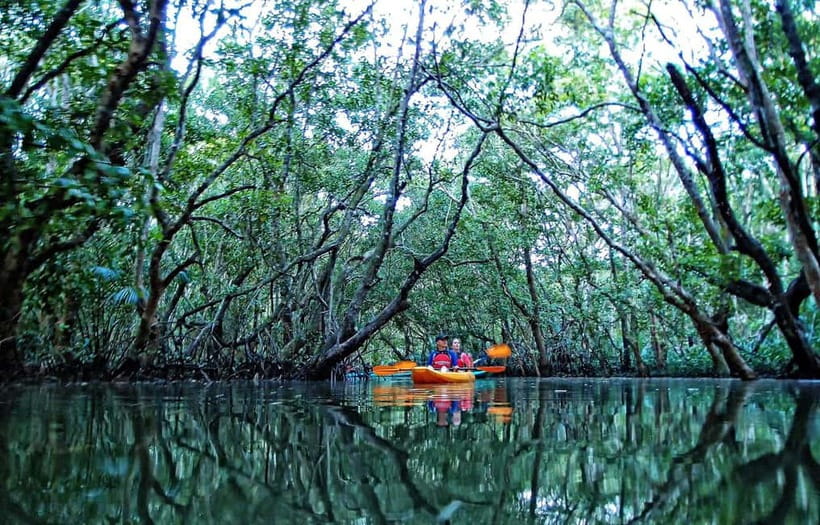
The route passes through ancient flooded forest and mangrove corridors. Some sections narrow into green tunnels. Others open back onto the main river, giving your guide room to talk about local culture, river life, and the role of the mangroves.
I like the sense of participation here. You are not simply being carried through the scenery. You learn how to steer, keep your kayak moving, and work with the river. That makes the place easier to notice. A heron overhead, a crab hole in the mud, or a change in the shape of the roots becomes part of the trip rather than background decoration.
The forest also has a practical purpose. The area contains 32 mangrove species, including the endangered Camptostemon philippinense. These trees help slow coastal erosion, shelter young fish, and store carbon. The conservation message is useful because it connects the calm scene around you with the hard work of protecting it.
More Mangrove Kayak Tours in the world:
- Sarasota Guided Mangrove Tunnel Kayak Tour
★ 5.0 · 2,440 reviews - Key West Mangrove Kayak Eco Tour
★ 5.0 · 2,205 reviews - Krabi: Kayak Adventure through Ao Thalane Mangrove Forest
★ 4.6 · 2,024 reviews
Getting from Panglao or Tagbilaran to the river
Round-trip transport is included from resorts in Panglao Island or Tagbilaran City. That removes one of the less pleasant parts of arranging a river outing in Bohol: finding the station and sorting out transport at the right time.
The journey is shortest from Tagbilaran City, at about 15 minutes according to the activity information. From Panglao, allow roughly an hour. The stated transport schedule may vary by pickup point, traffic, and the number of stops, so I would not plan a tight appointment immediately after the tour.
The drive is part of the transition from resort Bohol to rural river country. Still, it is a real consideration. If you are staying on Panglao and have only one free morning, the time in the van reduces the amount of your day available for other activities.
At the river station, you have access to lockers, washrooms, changing rooms, and water refills. Bring clothes that can get wet, even if you expect to stay fairly dry. Swimwear under comfortable clothes is the sensible choice.
Safety first, then a short lesson
Before launching, you receive a safety briefing and basic kayaking instruction. That matters for first-time paddlers. You learn enough to handle the boat and understand what to do on the water before the route begins.
The activity is suitable for beginners, but it is still active. You are steering and paddling rather than sitting in a passenger boat. The maximum time on the water is two hours, which keeps the outing manageable for many newcomers while still giving you enough time to reach the quieter channels.
You must be able to swim. The activity is not suitable for non-swimmers, people with mobility impairments, or children under six. Those limits are worth taking seriously. A kayak can feel stable, but the river setting calls for basic water confidence.
Wear sunscreen and insect repellent. A camera is welcome, though you should protect it from splashes. Comfortable clothes, swimwear, and drinking water are also on the suggested packing list. Water refills are included, so you do not need to carry a large supply.
Entering the mangrove tunnels
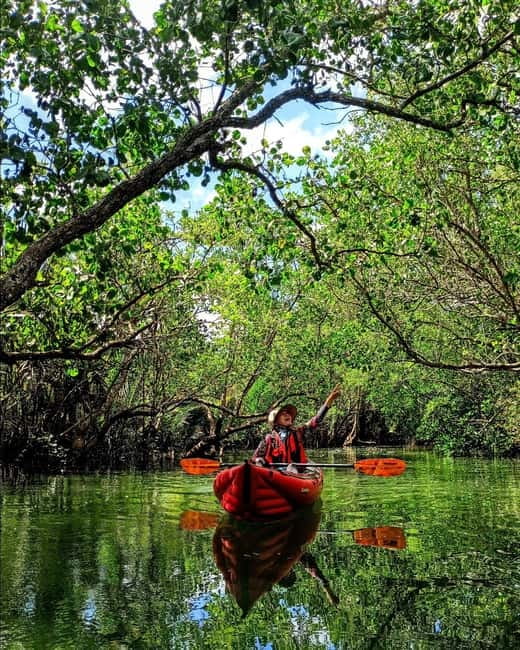
Once you launch, the character of the outing changes quickly. The sounds of traffic and the pickup road give way to paddle strokes, birds, and water moving against the kayak. The tunnels are narrow in places, so you may need to pay attention to your steering and the branches around you.
This is not a fixed ride with a running commentary every minute. The guide stops at points of interest and explains what you are seeing. That gives you time to look around rather than trying to listen while negotiating every turn.
Guides such as Vince and Jeremy bring different personalities to the trip, but the useful pattern is the same: local paddlers lead the route, point out plants and birds, and explain the river in plain terms. Vince has also taken photographs for participants during the tour, which can be helpful when you want to focus on paddling rather than holding your camera.
You may see herons, other birdlife, mangrove roots, and small crabs in the mud. Wildlife is never guaranteed, so you should come for the setting and the slow pace rather than a promised animal checklist. The river is alive, but it is not a zoo.
More Island Kayak Tours in the world:
- Phang Nga Bay Sea Cave Canoeing & James Bond Island by Big Boat
★ 5.0 · 4,666 reviews - Halong Bay Day Tour With Titop Island, Cave, Kayak & Lunch
★ 5.0 · 2,551 reviews - Phuket: James Bond Island Longtail Boat and Sea Canoe Tour
★ 4.8 · 2,364 reviews - Magnetic Island Discovery Tour with Snorkeling & Paddle Boarding
★ 5.0 · 1,372 reviews
What makes the conservation focus meaningful
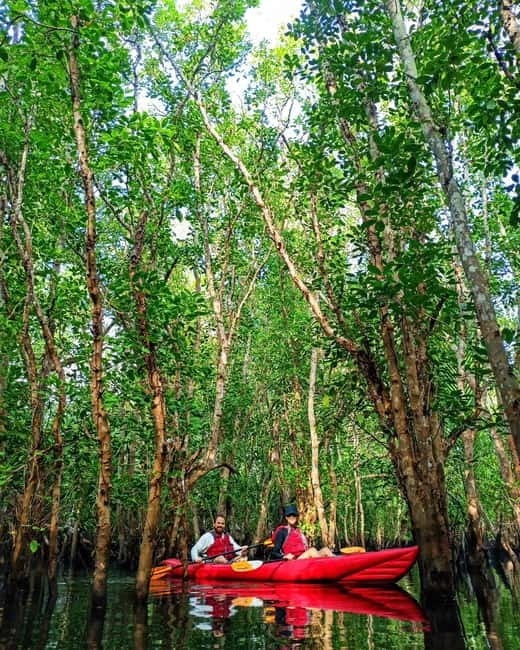
The conservation angle is more than a sentence added to a tour description. The route passes through an active conservation corridor, and the mangroves have a direct role in protecting the river and coastal areas.
The trees reduce erosion by holding soil in place. Their tangled roots give young fish a place to shelter. They also store carbon, which gives the forest value far beyond its appearance. When guides explain how typhoons damaged the area and how mangroves are helping it recover, the ecosystem becomes easier to understand.
I appreciate the link between tourism and protection here. The river community receives economic value from keeping the area healthy, while the small-group format limits the noise and traffic brought into the tunnels. That does not make the activity impact-free, but it is a more careful way to visit a sensitive place.
The 32 mangrove species add another layer of interest. You do not need to memorize names to enjoy the paddle, but learning that endangered species grow here makes the quiet route feel important rather than merely pretty.
Food, facilities, and the end of the paddle
After the kayaking, you receive local snacks, food, and drinks. The meal is a practical bonus after two hours of paddling. The portions have been described as sufficient, and the food has received particularly warm praise, so you should not need to arrange a separate meal immediately afterward.
The activity also includes river usage fees and community fees. That is useful when comparing the price with cheaper-looking kayaking options. A low headline cost can become less attractive if you still need to pay for a transfer, equipment, access, drinks, or a meal.
You can change clothes and wash up at the station before returning. That makes the outing easier to fit between other plans. If you are heading straight to another activity, leave enough time for the return drive and changing rather than assuming the five-hour schedule ends at the exact minute.
Is $64 a fair price?
At $64 per person, this is not the cheapest way to spend a morning in Bohol. I think the value depends on what you want from the outing.
The price includes transport from Panglao or Tagbilaran, kayak equipment, instruction, a professional guide, community and river fees, food, drinks, water refills, lockers, washrooms, and changing rooms. You are also paying for a small-group format and a route designed around low motor traffic.
That package is useful if you are staying on Panglao and would otherwise need to arrange a vehicle, hire equipment, and find the river access point yourself. It is less compelling if you only want a quick photo stop or a short, casual paddle near your hotel.
The strongest value is the quality of the time on the water. You get to steer through mangrove passages, listen to explanations at stops, and spend time in a place that is not built around crowds. The cost is easier to justify for people who care about nature, local guiding, and conservation.
The main value warning is the two-hour water limit. The total activity lasts five hours, but transport, preparation, food, and changing take up the rest. If you judge tours only by paddle time, you may find the price high. If you value the full half-day service, it is more reasonable.
Who will enjoy this most
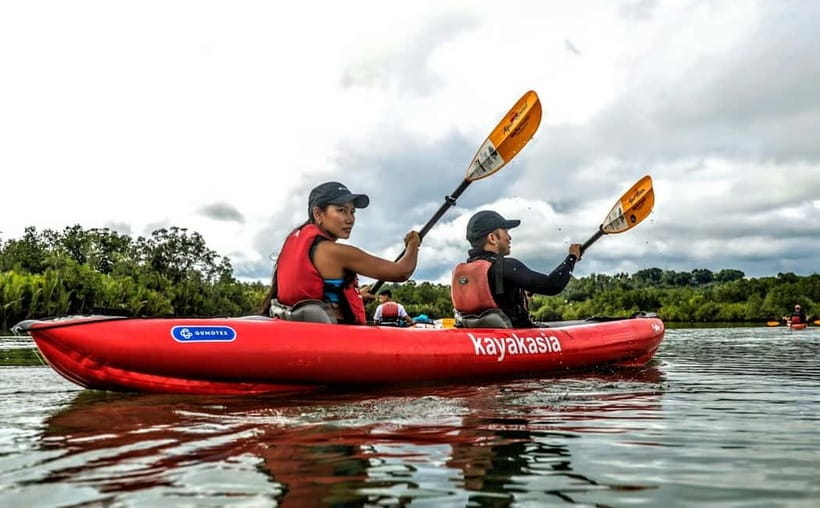
I would recommend this for adults, older children, couples, solo visitors, and small groups who want a calm outdoor activity away from Bohol’s busier stops. It is particularly suitable for beginners because the route includes instruction and the guides do not rush the experience.
You will enjoy it most if you like watching nature at close range and do not need constant action. The tunnel sections reward patience. You may spend several minutes simply steering, listening, and looking for movement among the roots.
It also suits anyone who wants a more thoughtful alternative to a standard sightseeing loop. The guides connect the forest with local communities, typhoon damage, fish nurseries, and erosion. That gives the outing more meaning than a simple paddle through attractive scenery.
I would not choose it for a person who dislikes getting wet, has no swimming ability, or wants a physically effortless ride. It is also not ideal for young children under six or people with mobility limitations. The two-hour paddle is not extreme, but it still requires repeated upper-body effort and balance.
Practical planning before you book
Choose swimwear or quick-drying clothes and apply insect repellent before leaving. A camera can add a lot to the experience, but a waterproof pouch is sensible because you are in a kayak and may pass through tight spaces.
Ask about your pickup time when you reserve, especially from Panglao. The drive can take about an hour, and the total outing lasts five hours. Keep your later plans flexible enough to allow for road delays and time to change after the paddle.
English and Tagalog are available for the live guiding. The experience has a 5.0 rating from seven recorded bookings, with repeated praise for the calm pace, clear explanations, friendly staff, and food. I would place the most weight on the consistent practical pattern: guides take their time, explain the environment, and do not push you through the route.
Cancellation is free up to 24 hours before the activity for a full refund. You can also reserve and pay later, which helps if your Bohol schedule is still shifting.
Should you book the Abatan River kayak tour?
Book it if you want quiet nature, local guiding, and active participation rather than a quick sightseeing stop. The mangrove tunnels, small groups, conservation work, included transport, and generous facilities make this a well-rounded half-day choice.
Think twice if your schedule cannot spare the drive from Panglao, if you are not a swimmer, or if you expect several hours of kayaking. For everyone else, this is one of the more distinctive ways to spend time in Bohol. You leave with more than photographs: you gain a better sense of how the river, the mangroves, and the local community depend on one another.
FAQ
How long does the activity last?
The full experience lasts five hours, including transportation, preparation, kayaking, food, and the return trip.
How long will I be on the water?
The maximum water time is two hours.
Where does the tour provide pickup?
Round-trip transport is provided from resorts in Panglao Island or Tagbilaran City.
How long is the drive to the river?
The drive takes about 15 minutes from Tagbilaran City and roughly one hour from Panglao or Loboc, depending on the pickup point and road conditions.
Is kayaking instruction included?
Yes. A basic kayaking lesson and a safety briefing are provided before the paddle.
Is this suitable for beginners?
Yes. The activity is suitable for beginners and includes instruction, safety guidance, equipment, and a professional kayak guide.
Do I need to know how to swim?
Yes. The activity is not suitable for non-swimmers.
What languages are available for the tour?
The live guide is available in English and Tagalog.
What should I bring?
Bring swimwear, comfortable clothes, sunscreen, insect repellent, water, and a camera if you want photographs.
Is food included?
Yes. Local snacks, food, drinks, and water refills are included.
Are changing facilities available?
Yes. Lockers, washrooms, and changing rooms are available at the river station.
Can I cancel for a refund?
Yes. You can cancel up to 24 hours in advance for a full refund. You can also reserve now and pay later.
Fresh kayak reviews from the world
- Gili sunrise stand-up paddle boarding (drone photoshoot)★ 4.7 · 55 reviews
- Los Cabos Arch & Playa del Amor Tour by Glass Bottom Kayak★ 4.7 · 41 reviews
- Geiranger: Guided Kayak Tour in Geiranger Fjord★ 4.7 · 192 reviews
- gili sunrise Stand-up paddle boarding or kayaking (droneshot★ 4.5 · 11 reviews
- Gili SUP Or Kayak With Drone Shoot . Daylight Or Sunrise★ 4.0 · 16 reviews
- Geiranger: Kayak tour with guide★ 4.9 · 27 reviews
- Geiranger: Kayak Tour with Waterfall Views★ 5.0 · 19 reviews
- Gdańsk: Islands and Canals Private Kayak Tour★ 4.9 · 10 reviews
Island Kayak Tours, compared.
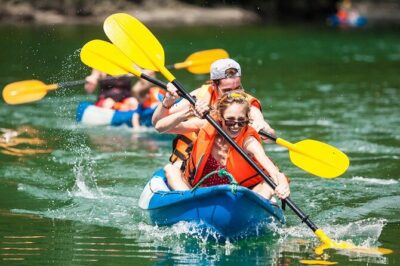
Halong Bay Day Tour With Titop Island, Cave, Kayak & Lunch
Read our review →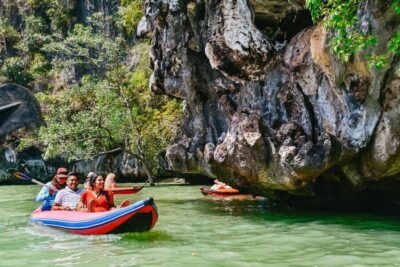
Phuket: James Bond Island Longtail Boat and Sea Canoe Tour
Read our review →
Kailua Bay, Oahu: Epic Kayak and Snorkel to Islands
Read our review →

James Bond Island with Canoeing and Lunch by Speedboat
Read our review →
Easy Ride Pedal Kayak Tour Marco Island & Naples (Pedal or Paddle
Read our review →
Pula: Cave Kayak Tour, Snorkeling and Island Jumping
Read our review →
Thousand Island Mangrove Tunnel, Manatee & Dolphin Kayak Tour w/Cocoa Kayaking
Read our review →Browse the lists this tour appears in